Mastering Professional Floral Design Skills for Luxury Events
- Maria Castillo
- May 18
- 3 min read

Floral design is an art. It demands precision, creativity, and a deep understanding of nature’s forms. I have spent years refining my professional floral design skills to craft experiences that resonate beyond mere decoration. Each arrangement tells a story. Each petal, leaf, and stem plays a role. The goal is to create luxury event designs that feel both timeless and fresh.
Elevating Professional Floral Design Skills
Mastery begins with fundamentals. But true artistry emerges when you push boundaries. I focus on minimalism and clarity. I avoid clutter. Instead, I emphasize restraint. This approach highlights the natural beauty of each bloom. It also aligns with sustainable practices, reducing waste and honoring the environment.
To elevate your skills, start by mastering these essentials:
Flower selection: Choose blooms that complement each other in color, texture, and form.
Balance and proportion: Create harmony by balancing size and shape.
Color theory: Use palettes that evoke mood and sophistication.
Line and movement: Guide the eye with thoughtful placement and flow.
These principles form the backbone of every design. They allow me to build complex arrangements that still feel effortless.

What are some advanced techniques in floral design?
Advanced floral design techniques unlock new dimensions of creativity. They require patience and practice but yield stunning results. Here are some I rely on:
Structural mechanics: Use hidden supports like floral foam cages, wire frameworks, or chicken wire to create daring shapes and heights.
Textural contrast: Combine soft petals with rough foliage or delicate blooms with bold branches to add depth.
Negative space: Intentionally leave gaps to enhance focus and create breathing room.
Monochromatic layering: Use varying shades of a single color to build richness without overwhelming.
Asymmetry: Break traditional symmetry to create dynamic, modern compositions.
Incorporating unexpected elements: Add natural materials like driftwood, stones, or feathers for unique accents.
These techniques transform simple bouquets into sculptural art pieces. They also allow customization for each event’s theme and atmosphere.
The role of sustainability in luxury floral design
Luxury and sustainability are not mutually exclusive. I integrate eco-conscious choices into every project. This commitment enhances the authenticity and longevity of my designs.
Here’s how I approach sustainability:
Locally sourced flowers: Reduces carbon footprint and supports regional growers.
Seasonal blooms: Ensures freshness and minimizes environmental impact.
Reusable mechanics: Opt for floral foam alternatives or reusable containers.
Composting: Return organic waste to the earth.
Minimal packaging: Avoid excess plastic and non-recyclable materials.
Sustainability adds a layer of meaning to luxury. It respects nature while delivering beauty that lasts in memory.
Tools and materials that enhance floral artistry
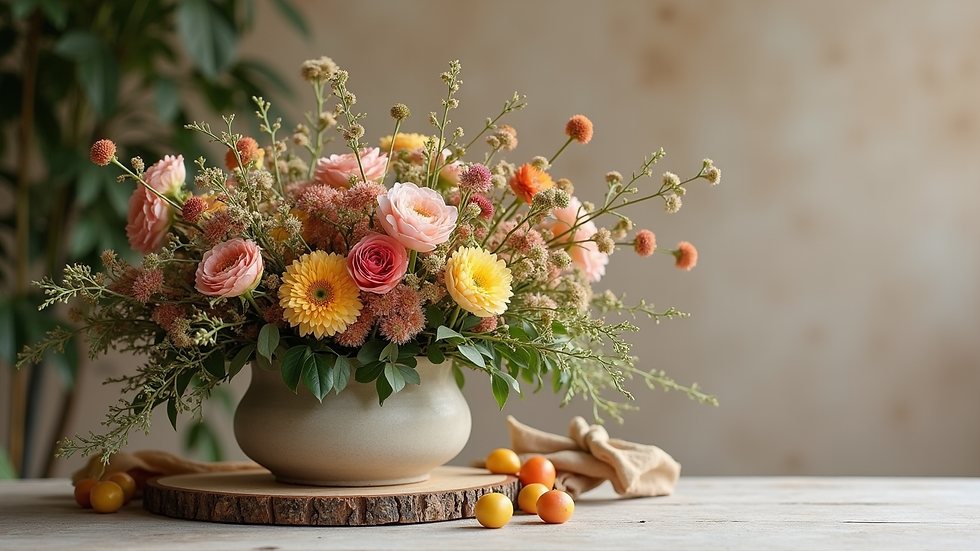
The right tools elevate craftsmanship. I invest in quality shears, floral knives, and wire cutters. These allow precise cuts and clean lines. Floral tape and wire help secure delicate stems without damage.
Materials matter too. I prefer:
Natural floral foam alternatives: Such as chicken wire or moss.
Organic floral preservatives: To extend vase life.
Elegant containers: Glass, ceramic, or metal vessels that complement the design.
Textural fillers: Seed pods, berries, and grasses add interest.
Mastering tool use and material selection is essential for professional floral design skills. It ensures every piece is both beautiful and durable.
Bringing it all together: crafting unforgettable floral experiences
Combining these elements creates more than decoration. It creates atmosphere. It tells a story. It evokes emotion.
When I design for weddings, private parties, or corporate events, I focus on:
Client vision: Listening carefully to desires and themes.
Spatial awareness: Tailoring arrangements to venue size and lighting.
Cohesive style: Ensuring flowers complement other design elements.
Attention to detail: From stem trimming to final placement.
This holistic approach guarantees floral designs that feel intentional and artful. It transforms spaces into immersive experiences.
For those ready to deepen their craft, exploring advanced floral design techniques offers endless inspiration and growth.
Mastering professional floral design skills is a journey. It blends tradition with innovation. It honors nature while pushing creative limits. Above all, it creates moments that linger long after the last petal falls.


Comments